How Laser Treatments Work
How laser treatments work comes down to one idea: light of a chosen colour is absorbed by a target in the skin, turns to heat, and changes that target. Hair, ink, vessels, and water each absorb differently. At our Niagara clinic, we match the wavelength to the job before any session.
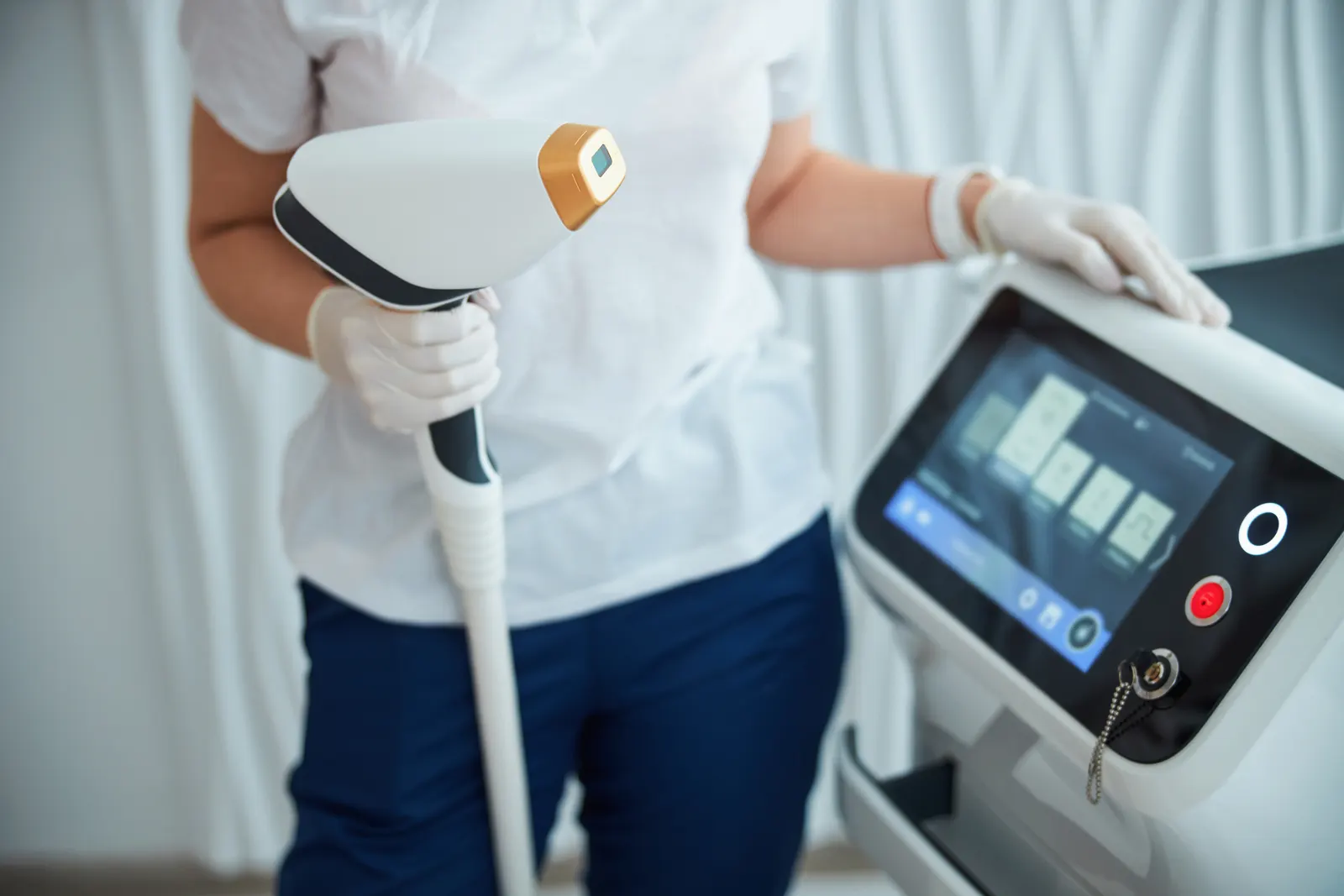
Light Finds a Target and Turns to Heat
Every laser treatment we offer in Niagara runs on the same simple chain. The laser sends light of one exact colour, called a wavelength. Something in your skin absorbs that light. The absorbed light becomes heat. The heat changes the thing that absorbed it.
The "something" is called a target, and there are three big ones. Melanin, the pigment in hair and skin. Hemoglobin, the red in blood vessels. And water, which fills every skin cell.
Pick the wavelength that your target absorbs strongly, and the energy lands where you want it. That is how laser treatments work in a single paragraph. Everything else is detail and discipline.
Selective Photothermolysis in Plain Words
The formal name for this is selective photothermolysis. Break the word apart and it stops being scary. Photo means light. Thermo means heat. Lysis means breaking down. Selective means only the target, not the skin around it.
The trick is choosing a wavelength the target absorbs far more strongly than everything nearby. Then delivering the energy in a pulse shorter than the time the target needs to cool. Heat builds in the hair root, the vessel, or the ink particle. The surrounding skin stays close to normal temperature.
For hair removal, melanin in the hair shaft soaks up the light and cooks the follicle that grew it. The StatPearls review of laser hair removal explains that melanin absorbs light across roughly 300 to 1200 nanometers. How strongly each hair absorbs the light varies from person to person, which is one of the things we assess at your consult.
Why Different Jobs Need Different Lasers
Because each target absorbs different colours of light, no single laser does every job. Hair removal leans on wavelengths like 755 nm and 1064 nm, chosen against your skin tone. Vascular work uses wavelengths that hemoglobin drinks up. Resurfacing uses wavelengths that water absorbs.
Resurfacing flips the logic and aims at water itself. CO2 and Er:YAG lasers heat the water in skin cells to remove or remodel fine layers. The StatPearls chapter on ablative laser resurfacing describes how that controlled injury triggers fresh collagen as the skin heals.
We keep a full plain-words map of which wavelength does which job on our laser technology page. It is the same map we use for every plan in Niagara. The short version: the machine matters less than the match between wavelength, target, and your skin.
Why Laser Treatments Are Spaced Weeks Apart
People in Niagara often ask why we cannot just do everything in one long visit. The answer is biology, and it differs by treatment.
Hair grows in cycles, and lasers only kill follicles in their active growth phase. Only some of your hairs are in that phase on any given day. So we treat, wait 4 to 6 weeks for the next wave to activate, and treat again. Most areas need 6 to 8 sessions.
Collagen work waits on your body's repair clock. New collagen forms over three to six months, whether the heat came from a laser or from radiofrequency. Resurfacing waits on healing, since skin needs time to rebuild between passes. Rushing any of these timelines adds risk without adding results.
What a Laser Session Physically Feels Like
Honestly: quick snaps of heat. Most people compare it to an elastic band flicked against the skin, over and over, fast. Some areas sting more than others. Bony spots and thin skin feel sharper. Fleshier areas feel like little more than warmth.
Most people find it easy to tolerate, and each pulse lasts a fraction of a second. Cooling built into modern machines takes the edge off. Sessions run 15 to 60 minutes depending on the area. You head back into your Niagara day right after.
Understanding how laser treatments work makes the sensation less strange. You are feeling the target absorb light and heat up, exactly as designed. Our what to expect guide walks through a full visit from prep to aftercare.
How Laser Treatments Work: Your Questions
Is a laser the same as radiation?
Laser light is light, not the ionizing radiation used in X-rays. It cannot alter DNA the way X-rays can. It is simply one pure colour of light, focused and pulsed with precision. The risks that do exist come from heat, which is why wavelength choice and settings matter so much.
Why does my skin tone change which laser is used?
Your skin contains melanin, the same pigment lasers target in hair. Shorter wavelengths get absorbed by surface melanin, which wastes energy and can burn darker skin. Longer wavelengths like 1064 nm pass deeper before absorbing. We confirm the right wavelength for your skin at your consult, every time.
Why do I need so many sessions?
Because biology works in waves. Hair follicles only die when hit during active growth, and just a fraction are active at once. Collagen rebuilds on its own slow schedule, not on demand. Each session catches the next wave. Spacing them 4 to 6 weeks apart for hair matches the growth cycle.
Does a stronger laser mean better results?
No. The match matters more than the power. The right wavelength at conservative settings beats the wrong wavelength at full blast, which mostly adds burns. Good laser work looks boring: correct target, correct pulse, correct spacing, repeated patiently. That is what produces results you can see.
Does laser treatment hurt?
You will feel it. Quick snaps of heat, like an elastic band against the skin, is the usual description. Most people find it easy to tolerate, and cooling systems help. Sensitive areas sting more than fleshy ones. Sessions are short, and the sensation stops the moment the laser does.
Can one machine treat everything?
No single wavelength suits every target and every skin tone, whatever an ad says. Hair, vessels, ink, and water each absorb different colours of light. That is why we discuss your specific concern at a consultation first. The plan names the right tool for your exact job before anything is booked.
Ready to see this in practice? Browse all our laser treatments, or read what to expect at your first visit here in Niagara.