Acne Scars in Niagara: Why They Form and What Helps
Acne scars form when deep breakouts damage the collagen under the skin. Some heal as dents, some as raised bumps, and some marks are only colour that fades. This page helps Niagara patients tell the difference and understand what realistic improvement looks like. A consultation makes it specific to your skin.
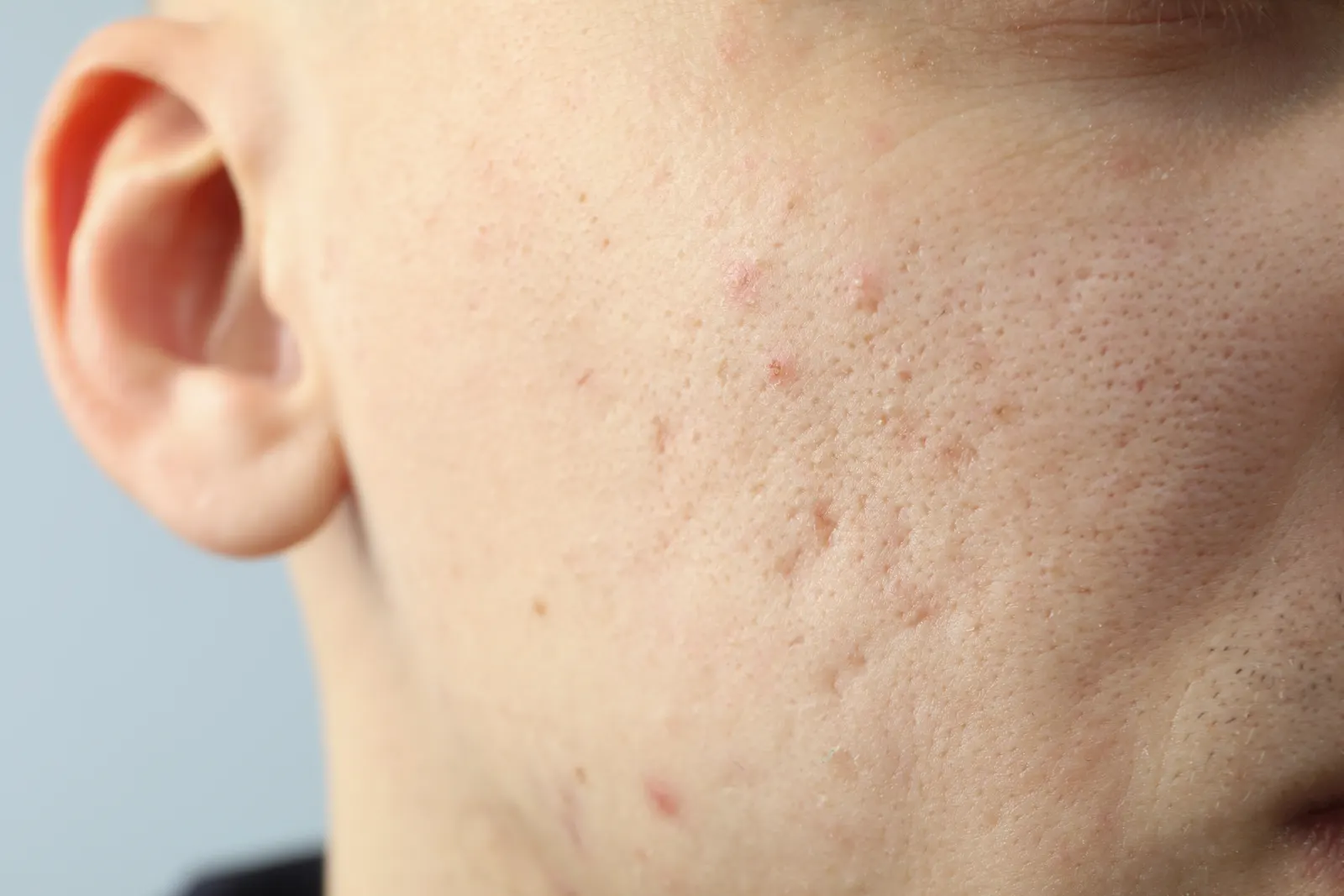
Why Acne Leaves Scars Behind
A deep pimple is a small injury. Inflammation reaches down into the dermis, the layer that holds collagen. When the spot finally heals, the skin has to rebuild that support from scratch.
The rebuild is rarely perfect. If the skin makes too little collagen, the spot heals as a dent or pit. If it makes too much, the spot heals as a raised bump. Picking and squeezing make both outcomes more likely.
The American Academy of Dermatology describes how depressed acne scars form and why care starts with a proper assessment.
Rolling, Boxcar, and Ice Pick Scars in Plain Words
Rolling scars
Broad, shallow dips with soft edges. They give the cheek a wavy look in side light. These usually respond best to treatment.
Boxcar scars
Round or oval dents with sharp, defined edges, like a thumbprint in clay. Common on the cheeks and temples. They respond moderately well.
Ice pick scars
Narrow, deep pits that look like enlarged open pores. They reach far into the skin, so they are the most stubborn type.
Raised, firm scars can form too, most often along the jaw, chest, and back. Most people have a mix of types, which is why treatment plans are mixed as well. We see every combination here in Niagara.
Pigment Marks Are Not True Acne Scars
Many spots that people call scars are actually flat marks of colour. A red or purple mark after a pimple is lingering blood supply. A brown mark is extra pigment left behind by inflammation. Both are common, and both usually fade over months.
Here is a simple check. Stretch the skin gently in good light. If the mark is flat and only the colour shows, it is a pigment mark, not a scar. If there is a dent or bump you can see or feel, it is a true scar.
This matters because the treatments differ. Colour responds to lasers that target pigment or redness, like our laser pigmentation removal sessions. Texture needs collagen remodelling instead. Treating the wrong problem wastes your time.
What Improvement in Acne Scars Is Realistic
Honest expectations first. No treatment returns scarred skin to the way it was before acne. What good treatment does is soften: shallower dents, smoother texture, more even colour. Most people need a series of sessions, and change builds gradually over months as collagen rebuilds.
Active breakouts come first. Treating scars while new cysts are forming is working against the tide. If your skin is still flaring, start with our acne page. When your skin is calm, our acne scar treatment page shows our step-by-step approach to acne scars in Niagara.
Acne Scar Questions from Niagara Patients
Do acne scars fade on their own?
Colour marks usually fade on their own over several months. True scars, the dents and bumps, do not. They can soften slightly as skin remodels with age, but texture change rarely disappears without treatment. That is why the first step is telling marks and scars apart, which we do at your consultation.
What type of acne scars do I have?
Most people have a mix. Rolling scars are shallow dips with soft edges. Boxcar scars are sharper, well-defined dents. Ice pick scars are narrow and deep. You do not need to diagnose yourself. Bring your skin to a consultation in Niagara and we will map it together.
Are dark marks after pimples actually scars?
No. Dark or red marks that sit flat on the skin are pigment and blood vessel changes, not scars. They usually fade over three to twelve months, and sun exposure slows that fading. Daily sunscreen speeds your progress more than almost anything else you can do.
Can laser completely remove acne scars?
No, and be cautious with anyone who says otherwise. Laser treatment softens and blends scars so they catch less light and shadow. Many people see a clear, satisfying change in texture and tone. The goal is improvement you can see, not skin that looks like the scarring never happened.
When can scar treatment start?
After your active acne is under control. New breakouts create new damage, so treating scars mid-flare gives poor value. If you still get regular cysts, see a dermatologist first. Once the skin has been calm for a few months, scar work makes sense.
Why do some people scar and others do not?
Genetics play a large role, along with how deep the acne runs. Cystic acne scars more often because the inflammation reaches deeper. Delay matters too: the longer severe acne goes untreated, the higher the risk. Picking and squeezing raise it further still.
For depressed scars that sit deep, RF microneedling is often the strongest option we have. It carries heat below the surface with needles instead of light, which suits rolling and boxcar scarring.
Other scars bothering you too? Read about surgical and injury scars. Curious about the gentler technology we often use for texture? See our non-ablative fractional laser page, or browse all conditions we treat.