Spider Veins: Causes and Treatment in Niagara
Spider veins are small, visible blood vessels that show through the skin as red, blue, or purple lines. Our clinic provides spider vein treatment in Niagara with vascular lasers that close these vessels over a short series. A consultation confirms your veins are cosmetic, then we build a plan around them.
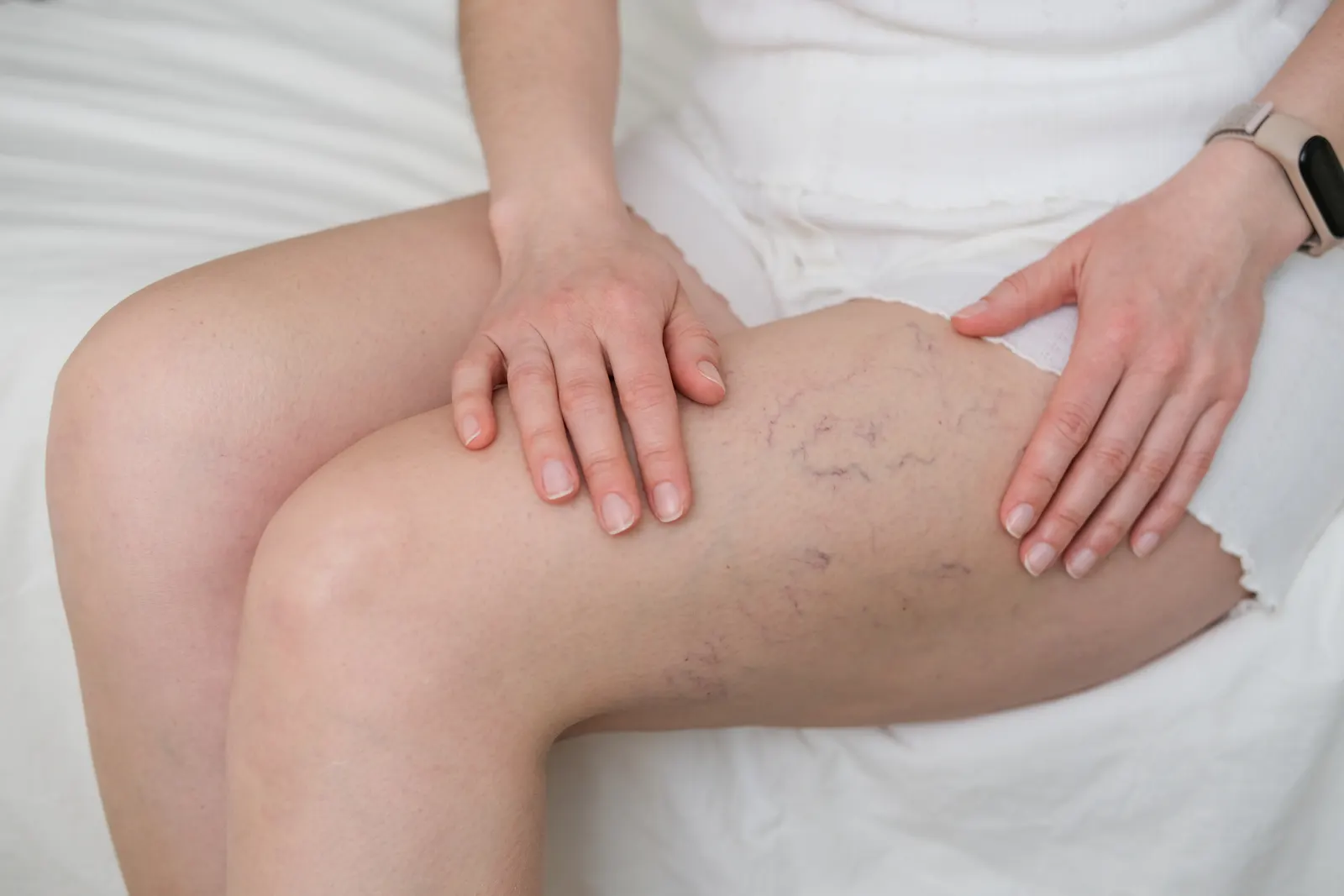
What spider veins are and where they show up
Spider veins are clusters of tiny, damaged blood vessels sitting just under the skin. They look like thin red, blue, or purple lines. Often they branch out like a web or the legs of a spider, which is where the name comes from.
They show up most often in two places. On the legs, they favour the thighs, calves, and ankles. On the face, they thread across the nose and cheeks. Leg veins tend to look blue or purple, while facial vessels usually look red.
Spider veins are very common. For most people in Niagara, they are a cosmetic issue, not a health problem. They do not fade on their own, though. If they bother you, treatment is straightforward and quick.
Why spider veins appear in the first place
Tiny one-way valves inside your veins keep blood moving toward the heart. When those valves weaken, blood pools and stretches the small vessels near the surface. That stretched vessel is what you see. Most people with them have a family history, as reported in the StatPearls clinical review of spider veins.
The common causes stack on top of that genetic base:
- Long hours standing or sitting, common in service and hotel work across Niagara.
- Pregnancy, which raises blood volume and pressure in the legs.
- Hormonal shifts and age, as vessel walls lose strength over time.
- Sun damage, the usual culprit for facial vessels on the nose and cheeks.
Women develop them more often than men. You cannot change your genetics, but movement breaks and sun protection slow new ones down.
Spider veins are not varicose veins
These two get mixed up, and the difference matters. Spider veins are flat, fine, and cosmetic. Varicose veins are larger, rope-like veins that bulge above the skin. They are a different problem, and they can signal weak valves deeper in the leg.
See a doctor about your veins if you notice aching, heaviness, swelling, cramping, or skin changes around a bulging vein. Those symptoms deserve a proper medical assessment before any cosmetic work. MedlinePlus outlines the medical treatments for that condition on its varicose veins page.
Our lasers treat the small, surface-level vessels. If we see signs of the deeper problem at your consult, we will say so plainly. We will point you to your doctor first. That order protects your results too, since treating surface veins rarely lasts if the deeper valves still leak.
How spider vein treatment in Niagara works
Vascular lasers send light that hemoglobin, the pigment in blood, absorbs. The vessel wall heats, seals shut, and your body clears it away over the following weeks. The skin over it is left alone. This is the core of our laser vein removal service.
Honest expectations, based on what we see:
- Facial vessels respond fastest, often in one to three sessions.
- Leg veins are slower and usually need two to four sessions, spaced weeks apart.
- Cleared veins do not return, but new ones can form nearby over the years.
Deeper leg vessels sometimes respond better to injection treatments done in medical vein clinics. If that fits your case better, we will tell you at the consult. Spider vein treatment in Niagara starts with that honest look at what you have.
Spider vein questions we hear most
Does laser vein treatment hurt?
You feel a series of quick, warm snaps as the laser fires along the vessel. Most people find it easy to tolerate. Sessions are short, often fifteen to thirty minutes depending on how many veins we treat. Cooling protects the surrounding skin. Any stinging fades within an hour or so afterward.
How many sessions do spider veins need?
Facial vessels often clear in one to three sessions. Leg veins usually need two to four, spaced about four to eight weeks apart. The number depends on vessel size, colour, and depth. We give you a realistic range at your consultation after we look at the actual veins.
Do treated veins come back?
A vessel your body has cleared is gone. What can happen is new veins forming nearby. The same genetics, hormones, or standing job that caused the first ones drives them. Many people book a touch-up visit every year or two. Support stockings and movement breaks help slow new leg veins.
Can I treat leg veins in summer?
You can, but timing matters. Treated skin needs sun protection, and legs can show bruise-like marks for a few weeks. Many people in Niagara prefer fall and winter sessions so their legs are clear by beach season. If summer is your only window, we adjust the plan and aftercare.
What is the downtime after a session?
There is little to none. You can walk out and carry on with your day. Treated areas may look red or slightly bruised, and leg veins can darken before they fade. We suggest skipping hot tubs, saunas, and hard workouts for a day or two. Sunscreen on treated skin is non-negotiable.
Should I see a doctor before laser?
If your veins bulge, ache, or come with swelling or skin changes, yes, see your doctor first. Those signs point to varicose veins, which need medical assessment. If your veins are fine, flat, and simply visible, they are usually cosmetic. We screen for the difference at every consultation.
Facial redness often travels with facial veins. Read about rosacea and facial redness, including broken capillaries, or browse everything on our conditions we treat page.