Fine Lines and Wrinkles Treatment in Niagara
Fine lines come from collagen loss, sun exposure, and years of repeated expression. Our fine lines and wrinkles treatment in Niagara uses lasers to rebuild collagen and smooth skin texture. Options run from gentle no-downtime sessions to deeper resurfacing. A consultation matches the right level to your skin and your schedule.
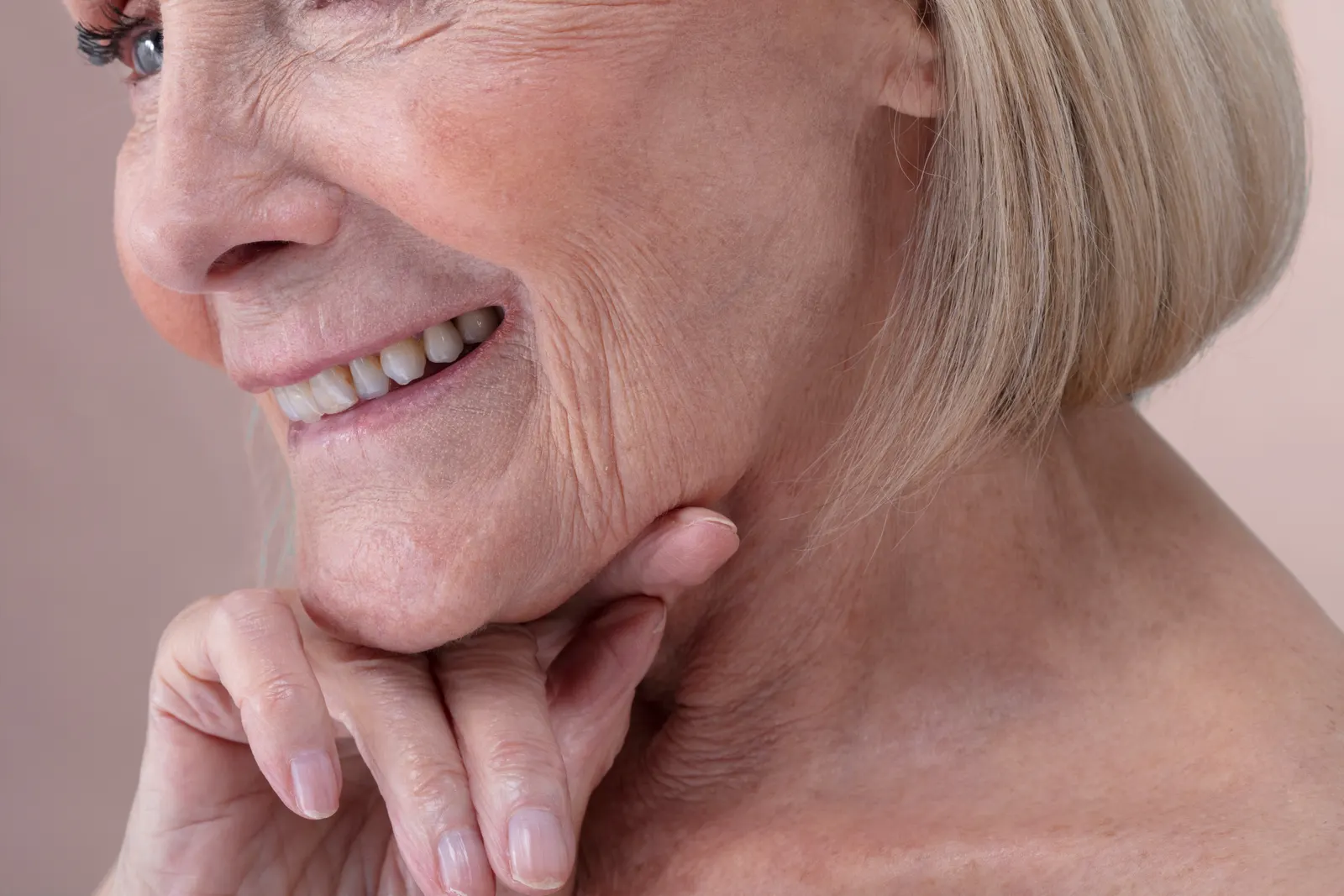
Why skin wrinkles in the first place
Wrinkles are what skin does when its support structure thins. Collagen gives skin strength, and elastin gives it snap. From our thirties onward, we make less of both. The skin gets thinner and slower to bounce back, so creases start to settle in.
Sun exposure speeds all of this up. MedlinePlus calls sun the single biggest factor in visible skin aging, in its page on aging changes in skin. Smoking, dry skin, and genetics add their share.
Expression lines are the other piece. Every smile, squint, and frown folds the skin the same way. Young skin springs back. Older skin slowly keeps the crease. That is why lines gather around the eyes, mouth, and forehead first.
What laser can do for wrinkles, and what it cannot
Lasers work by prompting your skin to rebuild collagen. Done over a series, that thickens and smooths the skin from within. Here is the honest scope of it.
What responds well: fine lines, crepey texture, rough patches, and overall skin quality. Lines around the eyes and mouth often soften clearly. Skin tone and glow usually improve alongside.
What responds less: deep folds and sagging caused by volume loss. The folds that run from nose to mouth, or hollowed cheeks, are largely about lost fat and bone support underneath. A laser treats the skin itself, so it cannot replace volume the face no longer has. If that is your main concern, we will say so at the consult rather than sell you the wrong tool.
The fine lines and wrinkles treatment ladder, gentle to deep
Think of laser options as a ladder. Each step up gives more change per session and asks for more recovery time.
- Gentle: no-downtime collagen treatments done as a series. Subtle smoothing that builds over months, with nothing to hide afterward.
- Middle: non-ablative fractional laser. It heats columns under the surface without removing skin. A few days of redness, several sessions, solid smoothing.
- Deep: ablative laser skin resurfacing. It removes the damaged surface layer so new skin grows in. One treatment can improve wrinkles dramatically, but recovery takes one to two weeks.
The deep end has the strongest evidence for etched-in lines. StatPearls reports major wrinkle improvement from ablative treatment in its review of ablative laser resurfacing. Most people in Niagara land somewhere in the middle of the ladder, trading a little downtime for visible change.
Sessions, timelines, and realistic results
Collagen rebuilds slowly, so plan in months, not days. Gentle and middle-ladder options usually take three to five sessions, spaced about a month apart. Results keep improving for two to three months after the last one. Deeper resurfacing is often a single session, with results developing as the skin heals.
Your skin tone shapes the plan too. Deeper treatments carry more pigment risk on darker skin. We choose settings and wavelengths for your skin at the consultation. That is also where we match the ladder to your life. A realtor who cannot hide for a week needs a different plan than a retiree who can.
Aftercare is simple but firm: daily sunscreen, gentle products, and patience. Fine lines and wrinkles treatment in Niagara works best as a plan, not a one-off.
Wrinkle treatment questions we hear in Niagara
Which laser is best for fine lines?
It depends on the lines and your tolerance for downtime. Shallow, early lines respond well to gentle series treatments and non-ablative fractional sessions. Deeper, etched lines respond best to ablative resurfacing, which needs recovery time. There is no single best option, only the best fit, which your consultation in Niagara sorts out.
How long do laser wrinkle results last?
The collagen you rebuild is yours, and it lasts for years. Your skin keeps aging on top of it, though, so lines slowly return with time, sun, and expression. Most people in Niagara maintain results with a session or two each year plus daily sunscreen. Deeper resurfacing results generally hold the longest.
Can laser replace injections for wrinkles?
They do different jobs. Lasers improve the skin itself: texture, fine lines, and tone. Injections relax the muscles that fold the skin or restore lost volume. Expression lines that only show when you move respond better to those approaches. Etched lines and rough texture are laser territory. Many people combine both.
Does laser treatment for wrinkles hurt?
Gentle treatments feel like passing warmth, and most people find them easy to tolerate. Fractional treatments feel like sharp pinpricks of heat, so we use numbing cream first. Deeper resurfacing uses stronger numbing and feels hot and raw afterward, like a sunburn. We walk you through comfort options for each level.
How much downtime should I plan for?
Gentle series treatments: none. Non-ablative fractional: two to four days of redness and mild swelling. Ablative resurfacing: one to two weeks of healing, with pinkness that fades over the following weeks. We schedule around your calendar, and many people book deeper treatments before a quiet stretch at home.
At what age should I start treating fine lines?
There is no set age. The right time is when the lines bother you, or when you want to slow their arrival. Earlier, gentler treatment keeps skin quality up so deep lines take longer to form. Later treatment reaches for the stronger rungs of the ladder. Both are reasonable paths.
Wrinkles rarely travel alone. Read about sagging skin and laxity or rough skin texture. Or browse every concern on our conditions we treat page.