Sun Damage in Niagara: Age Spots, Freckles, and Uneven Tone
Sun damage builds up summer after summer: age spots, freckles, and patchy colour that makes skin look older. UV light pushes pigment cells into overdrive, and the marks stay after the tan fades. Sun damage skin treatment with lasers and IPL in Niagara breaks that pigment up.
How the sun damages skin
Ultraviolet light is invisible radiation that passes into the skin and damages cells. This MedlinePlus guide to sun exposure notes UV rays cause wrinkles, skin spots, and skin cancer over time.
Your skin defends itself with melanin, the pigment behind every tan. After years of Niagara summers, gardens, patios, and boat days, the pigment system starts misfiring. Some cells pump out melanin in clumps. Others go quiet. The result is spots, speckles, and patchy tone that no longer fades in winter.
Dermatologists call this photoaging. Much of what we read as an aging face is stored sun damage. Stored pigment is something lasers can reach.
Age spots
Age spots are flat brown marks, usually the size of a pencil eraser or larger. They gather where the sun hits most: the face, the backs of the hands, the shoulders, and the chest. Most people notice them from their forties onward, which is how they earned the name. Doctors call them solar lentigines, and they have nothing to do with the liver.
Each spot is a dense, stable deposit of melanin left behind by years of exposure. Creams lighten them slowly at best. Concentrated pigment responds much better to targeted light, which makes age spots one of the most satisfying things we treat. One caution first: any spot that changes shape, colour, or size should be checked by a doctor before treatment.
Freckles
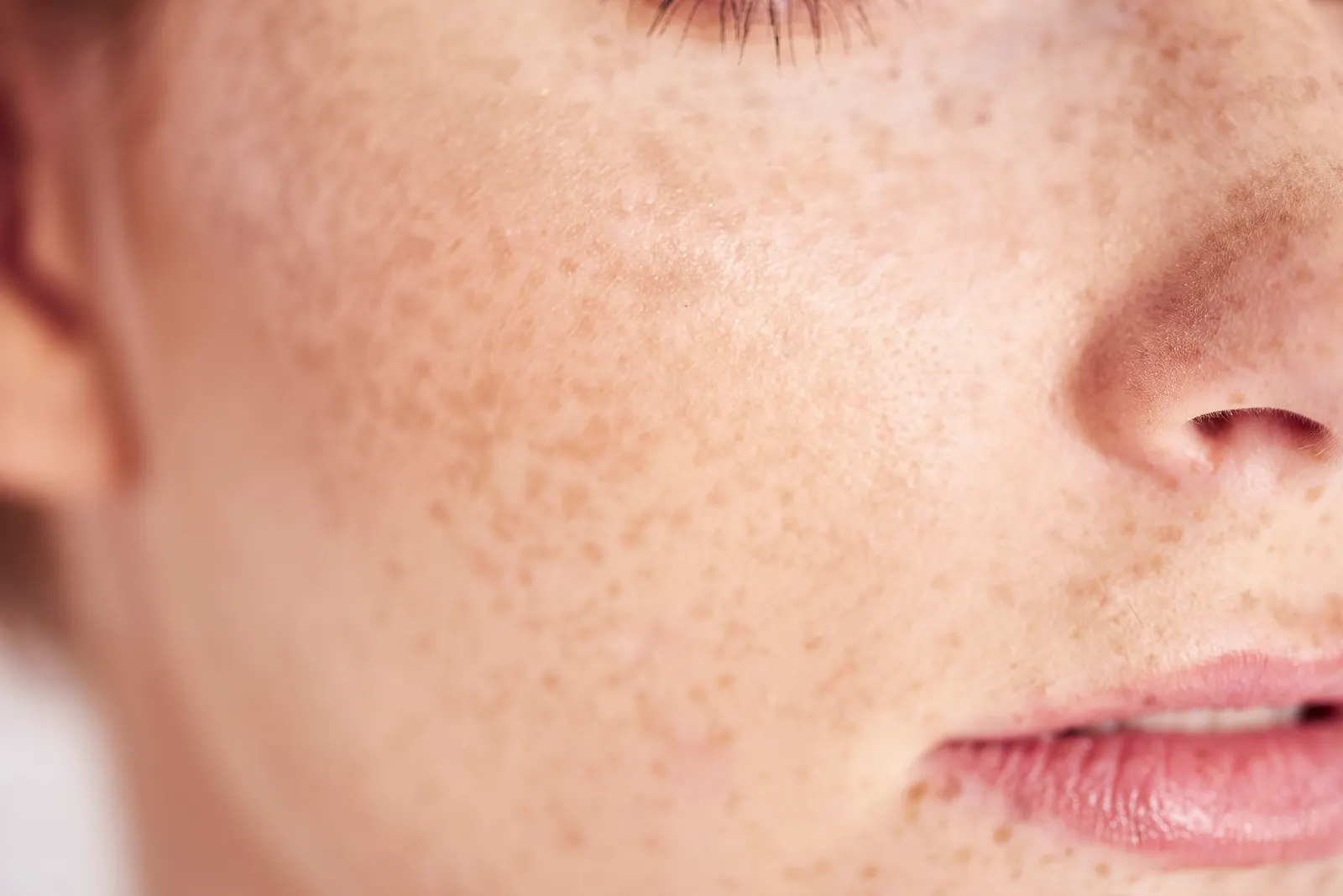
Freckles are small tan dots that usually appear in childhood, especially on fair skin that burns easily. They are partly genetic: the sun does not create the tendency, it switches it on. Classic freckles darken every summer and soften every winter, because the pigment cells behind them are sun-reactive rather than fixed.
Some adults love their freckles. Others watch them merge into larger, lasting patches over the years and want them softened. Pigment lasers and IPL can lighten freckles noticeably, often in a small number of sessions. Here is the honest part: new freckles will return with new sun exposure. People who protect their skin in Niagara summers keep their results far longer than people who do not.
Uneven skin tone
Uneven tone is the broader signature of sun damage. Instead of one clear spot, the skin shows blotchy patches, faint mottling, and a dull, weathered cast. Brown pigment mixes with fine redness from dilated vessels, so the face loses the smooth, single-colour look of younger skin. Makeup covers it, but many people would rather not rely on coverage every day.
Because the pigment is scattered rather than concentrated, this job suits broad, gentle treatment over a series of sessions. IPL photofacial treatments were built for exactly this: evening out overall tone across the whole face, chest, or hands. Texture and fine lines are a separate conversation, and we keep the two honest and distinct at your consult.
How lasers and IPL clear sun damage
Pigment lasers fire very short pulses of light that melanin absorbs. The energy shatters pigment clusters into fragments small enough for the body to clear over the following weeks. A recent scoping review of laser treatment for pigmented lesions found the Nd:YAG 1064 nm laser is used most often. Other wavelengths are chosen by spot depth and skin tone.
IPL takes a different approach. It is intense pulsed light, a broadband light source rather than a true laser. It treats brown spots and diffuse redness together, which is why it suits general tone-evening across a whole area.
Here is our rough guide to sun damage skin treatment. Discrete dark spots point to laser pigmentation removal. Overall blotchiness points to an IPL photofacial series. One important exception: patchy facial pigment driven by hormones may be melasma, which needs a far more cautious plan. We sort out which you have at your consultation in Niagara, and we choose the right wavelength for your skin. You can also browse every condition we treat for the wider picture.
Sun damage questions we hear in Niagara
How many sessions does sun damage skin treatment take?
It depends on the target. A few discrete age spots often clear in 1 to 3 laser sessions. Overall tone work with IPL usually runs 3 to 5 sessions, spaced about a month apart. Spots typically darken first, then flake away over one to two weeks. Your consult gives you a specific plan.
Will the spots come back?
A properly cleared spot is gone, but your skin can always make new ones with new sun exposure. Sun damage is cumulative, so protection decides how long results last. Daily sunscreen, hats, and shade in the strong months keep treated skin clear far longer. Think of it as maintenance, not failure.
Can darker skin be treated for pigment?
Often yes, but it demands extra care. Darker skin carries more background melanin, so settings and wavelength choice matter enormously. Longer wavelengths like Nd:YAG 1064 nm are usually the starting point. We assess your skin in person and choose the right wavelength for you before treating anything.
How do I know a spot is not something serious?
Cosmetic sun spots are flat, evenly coloured, and stable. See a doctor about any spot that grows, changes colour, bleeds, itches, or has ragged borders. We do not treat suspicious spots. If anything looks off at your consultation, we point you to medical care first.
When is the best time of year for pigment treatment?
Fall and winter are ideal in Niagara. Treated skin should not be tanned, and it needs protecting from strong sun afterward. Cooler months make both easy. Summer treatment is possible if you are diligent about sun protection, but most people find the off-season simpler.
What does treatment feel like?
Most people find it easy to tolerate. Each pulse feels like a warm snap against the skin, and sessions are short. Spots often look darker for several days before they flake off. IPL can leave mild redness for a few hours. Most people go straight back to their day.