Thinning Hair Treatment in Niagara: Causes and Laser Options
Thinning hair has many causes: pattern hair loss, stress shedding, postpartum changes, thyroid or iron problems. The right thinning hair treatment depends on which one you have. In Niagara, low level laser therapy is one option we offer, and this page explains it honestly.
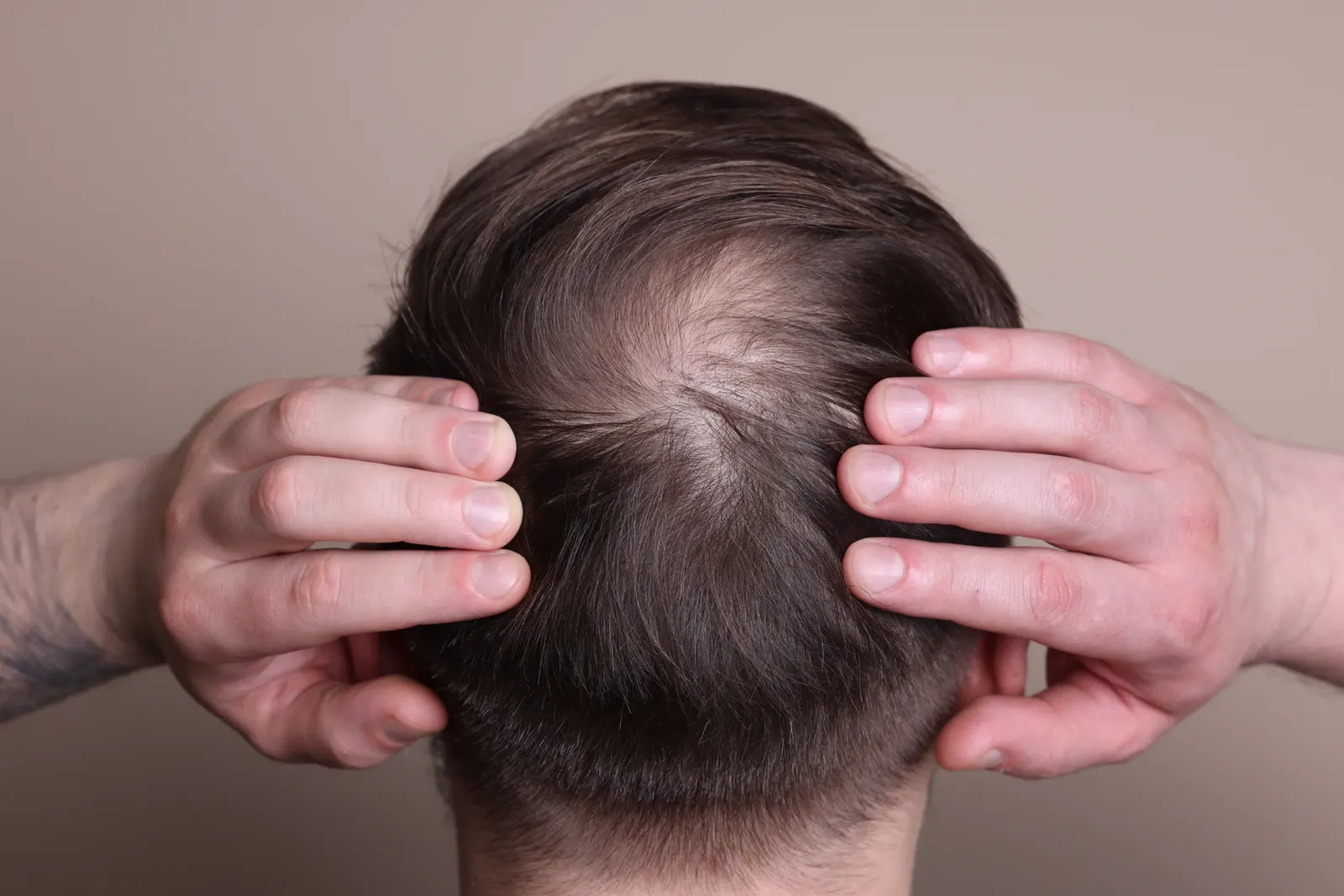
Why hair thins
Every hair on your scalp cycles through growth, rest, and shedding. Losing 50 to 100 hairs a day is normal, because new hairs replace them. Thinning happens when that balance tips. Either too many follicles rest at once, or follicles slowly shrink and produce finer, shorter hairs.
Thinning is rarely sudden. Most people in Niagara notice it gradually. A wider part, a see-through crown, a ponytail that feels smaller. By the time it is visible, the process has often been running for a while.
The cause matters more than the symptom. Different causes need different responses, and some fix themselves.
The most common causes of thinning hair
Pattern hair loss, called androgenetic alopecia, is by far the most common cause. It is genetic and driven by hormone sensitivity. This clinical summary of androgenetic alopecia notes it affects up to half of men and women. Men thin at the temples and crown. Women usually keep their hairline but thin across the top.
Other frequent causes include:
- Stress shedding, called telogen effluvium, after illness, surgery, or a hard stretch of life
- Postpartum shedding, a normal hormone reset that usually settles within a year
- Medical issues such as thyroid problems, low iron, or medication side effects
- Alopecia areata, where the immune system attacks follicles in patches
When to see a doctor about thinning hair
Some thinning deserves a medical check before any cosmetic treatment. See your doctor if hair is falling out in clumps or patches. Do the same if your scalp itches, burns, flakes heavily, or shows scarring. Sudden shedding after starting a new medication is also worth a call.
Blood tests can catch thyroid problems and low iron, and both are fixable. When the underlying issue is treated, that hair often returns on its own. No laser can substitute for that step, and we will tell you so at your consult.
If your doctor confirms simple pattern thinning with no medical cause, a cosmetic thinning hair treatment is worth discussing.
Low level laser therapy as a thinning hair treatment
Low level laser therapy, or LLLT, uses gentle red light around 650 nm. It does not heat or cut. The idea is that light stimulates energy production inside follicle cells and nudges resting follicles back into growth.
We want to be straight with you about the evidence. Some controlled trials report thicker, denser hair after regular sessions. A published review of laser therapy for hair loss concluded it appears safe and promising. The same review noted unsettled dosing and mixed results across studies. LLLT is a reasonable option, not a sure thing.
It suits early pattern thinning best, while follicles are shrunken but alive. It cannot revive follicles that scarred or vanished long ago. Plan on consistent sessions over several months before judging results. Our laser hair restoration page in Niagara covers the full process and schedule.
Thinning hair questions we hear in Niagara
How much daily hair loss is normal?
Around 50 to 100 hairs a day is typical, and more on wash days. Hairs you see in the brush were already at the end of their cycle. Worry less about the count and more about the trend. Watch for a widening part, a thinner ponytail, or newly visible scalp.
Does low level laser therapy actually work?
The honest answer is: for some people, to a modest degree. Trials have shown improved hair density, but reviews note mixed results and unsettled dosing. It is not a rescue for advanced loss. We present it as one option with realistic expectations, never as a promised fix.
How long before I see any change?
Hair grows slowly, so give it time. Most protocols run two to three sessions a week for several months. Shedding may slow first, with any thickness changes showing around month four to six. We take baseline photos so you can judge progress with your own eyes, not memory.
Does the treatment hurt or have downtime?
No. Low level laser therapy uses gentle light, not heat. Most people feel nothing at all during a session, and there is no downtime afterward. You can return to work or errands in Niagara right away. Sessions are short, which makes the schedule easy to keep.
I just had a baby and my hair is falling out. Should I panic?
No. Postpartum shedding is a normal hormone reset, and it can look dramatic around three months after delivery. It usually settles on its own within a year. If shedding continues well past that, or your part keeps widening, talk to your doctor and then consider treatment options.
Who is a good candidate for laser hair restoration?
The best candidates have early pattern thinning with follicles that still produce fine hairs. People with patchy loss, scalp disease, or scarring need a medical workup first. At your consultation we look at your scalp, your history, and your goals. We tell you plainly if this is unlikely to help.
Where to go from here
Ready to look at the option in detail? Read our laser hair restoration page, then book a consultation to talk it through. If hormones and hair are a bigger story for you, see excess facial hair in women. You can browse all the conditions we treat in Niagara too.